Blanco County, TX Neighborhood Guide
Blanco County sits in the heart of the Texas Hill Country, offering a scenic mix of rolling hills, spring-fed rivers, ranchland, wineries, wildlife, historic town squares, and quiet rural roads. The county includes Blanco, Johnson City, Hye, Round Mountain, Cypress Mill, and surrounding acreage communities, giving buyers a wide range of lifestyle options, from in-town cottages and river homes to luxury estates, ranchettes, vineyard-adjacent properties, and large private ranches.
For real estate buyers, Blanco County is appealing because it offers a quieter Hill Country lifestyle while staying connected to major Central Texas markets. Austin, San Antonio, Fredericksburg, Dripping Springs, Marble Falls, and New Braunfels are all within regional reach depending on the property location. Buyers often compare Blanco County with Hays, Gillespie, Kendall, Burnet, and Comal counties when looking for more space, stronger scenery, less density, and a slower daily rhythm. If you are starting your search, this guide on buying a home in Blanco County is a helpful resource for understanding local property types, lifestyle fit, and rural buying considerations.
This guide covers Blanco County’s history, lifestyle, real estate market, schools, transportation, things to do, amenities, residential settings, and investment potential. It is designed to help buyers, sellers, landowners, and relocating households understand the county’s strongest real estate drivers, including water access, land use, ag valuation, wells, septic, short-term rental considerations, and long-term Hill Country demand.
| Key Facts: Blanco County, TX | |
|---|---|
| County Seat | Johnson City |
| Major Communities | Blanco, Johnson City, Hye, Round Mountain, Cypress Mill, Sandy, and surrounding rural areas |
| Region | Central Texas Hill Country, positioned between Austin and San Antonio |
| Population | Approximately 13,581 residents based on the U.S. Census Bureau’s 2025 county population estimate |
| Area | About 709 square miles of land, with a low-density rural and small-town settlement pattern |
| Primary Roads | U.S. Highway 281, U.S. Highway 290, Ranch Road 32, Ranch Road 1623, Ranch Road 165, and local county roads |
| Local Character | Hill Country, ranch-oriented, scenic, small-town, river-focused, winery-connected, and increasingly attractive to second-home and relocation buyers |
| Outdoor Anchors | Blanco State Park, Pedernales Falls State Park, the Blanco River, Pedernales River, Hill Country trails, and private ranch recreation |
| School Options | Blanco ISD, Johnson City ISD, and address-specific district assignments that should be verified before purchase |
| Market Profile | Mixed rural-residential market with single-family homes, acreage tracts, ranches, ranchettes, luxury Hill Country estates, land, and small-town properties |
Blanco County Lifestyle Snapshot
An editorial snapshot of the county’s strongest lifestyle attributes, not a statistical ranking.
Community Overview
Blanco County is one of the Texas Hill Country’s most recognizable rural lifestyle markets. It has the natural beauty buyers expect from the region, including limestone ridges, oak and cedar-covered hills, spring-fed waterways, open pastures, and wide night skies. At the same time, it is not as remote as some rural counties farther west. Its position along Highway 281 and Highway 290 gives residents access to Austin, San Antonio, Fredericksburg, Dripping Springs, Marble Falls, and New Braunfels while preserving a quieter county identity.
The county’s real estate appeal is broad because each part of Blanco County offers a different lifestyle. Blanco has a river-town feel centered around the Blanco River, Blanco State Park, the Old Blanco County Courthouse, and a growing small-business scene. Johnson City serves as the county seat and has become a gateway to wineries, restaurants, galleries, the Science Mill, and Lyndon B. Johnson National Historical Park. Hye and the Highway 290 corridor attract wine-country buyers, while Round Mountain and Cypress Mill appeal to those looking for ranches, larger acreage, and more privacy.
Buyers should approach Blanco County with a rural due diligence mindset. A property may involve a private well, septic system, road maintenance agreement, ag or wildlife valuation, floodplain considerations, burn ban rules, deed restrictions, or limited broadband access. These details are not drawbacks for the right buyer, but they are important to understand before closing. The strongest purchases usually match the buyer’s lifestyle goals with the property’s infrastructure, land characteristics, access, and long-term maintenance needs.
Blanco County is best for buyers who want Hill Country scenery, land, small-town culture, river access, wineries, and room to spread out while staying within reach of Austin and San Antonio.
What to Love
Year-Round Sunshine
Blanco County’s Central Texas climate supports outdoor living, weekend recreation, patio dining, gardening, and Hill Country events throughout much of the year.
Wineries & Luxury Amenities
Johnson City, Hye, and the Highway 290 corridor connect residents to wineries, tasting rooms, boutique lodging, restaurants, and scenic Hill Country destinations.
Outdoor Recreation
Blanco State Park, Pedernales Falls State Park, the Blanco River, and private ranchland give residents access to swimming, fishing, hiking, camping, and quiet open space.
History & Heritage
Blanco County was created in 1858 and named for the Blanco River, the clear limestone-bottomed waterway that runs through the area and shaped early settlement. The county was formed from parts of surrounding Central Texas counties, and its history reflects ranching, farming, German and Anglo settlement patterns, stage routes, courthouse towns, and the development of Hill Country communities along rivers and trade roads.
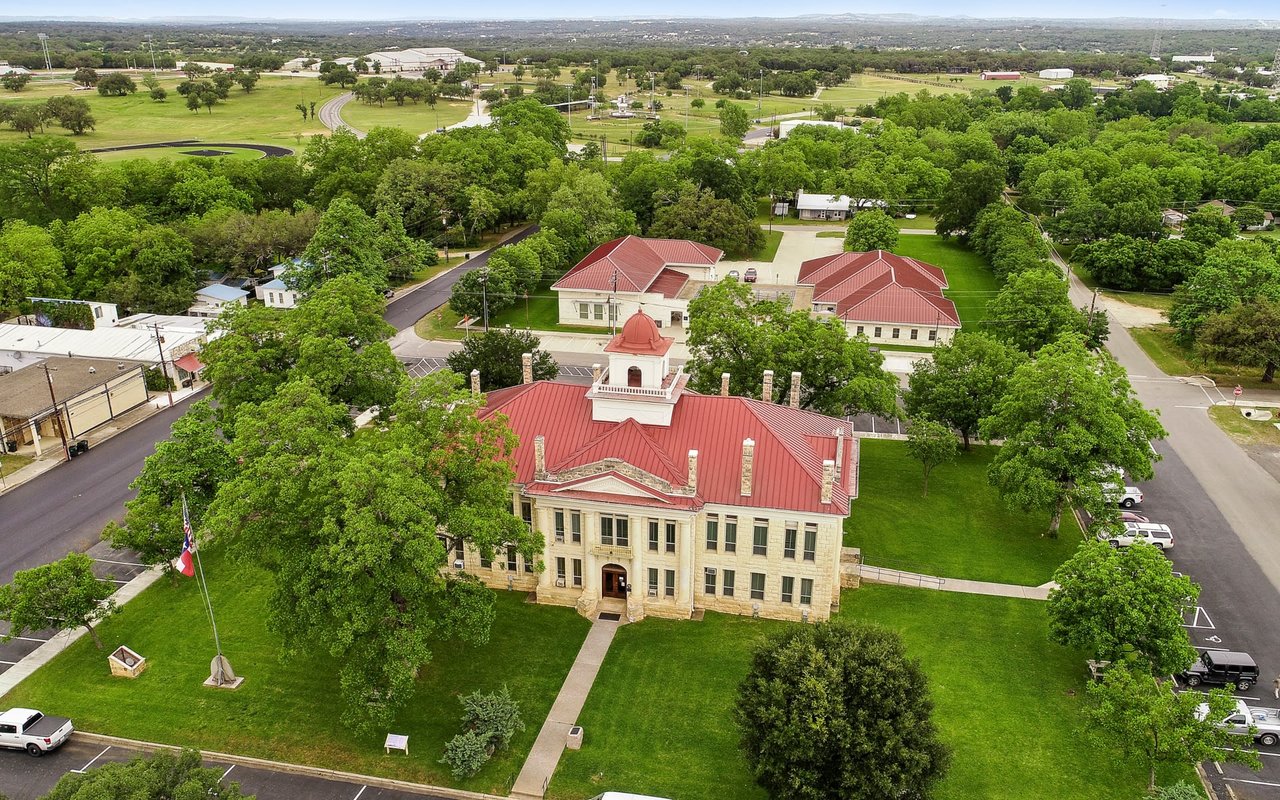
Blanco served as the original county seat before the seat of government moved to Johnson City in 1890. That history is still visible today. The Old Blanco County Courthouse, built in the 1880s, remains one of Blanco’s most recognizable landmarks and helps anchor the town square. Johnson City later became the county’s civic center, and the Blanco County Courthouse there remains an important symbol of local government and Hill Country history.
The county is also closely tied to President Lyndon B. Johnson’s story. Johnson City and the surrounding Pedernales River corridor are central to Lyndon B. Johnson National Historical Park, which tells the story of the 36th president from his family roots to the LBJ Ranch. That presidential heritage gives the county a level of historical importance that goes beyond its size and supports tourism, civic pride, and long-term regional recognition.
Blanco County’s heritage is not limited to one town. Blanco, Johnson City, Hye, Round Mountain, and the surrounding ranchlands each add a different layer to the county’s story, from courthouse history and river recreation to wine-country growth and presidential landmarks.
Map & Transportation
Blanco County’s transportation pattern is built around regional roads rather than dense public transit. Highway 281 runs north-south through Johnson City and Blanco, creating a key connection between the San Antonio area, the Hill Country, Marble Falls, and points north. Highway 290 runs east-west through Johnson City and Hye, linking the county to Dripping Springs, Austin, Stonewall, Fredericksburg, and the well-known Texas wine corridor.
Most residents rely on personal vehicles, and commute expectations should be tested carefully before buying. Drive time can vary widely depending on the property’s distance from paved roads, county road conditions, weather, school drop-off, weekend wine traffic, and whether the destination is central Austin, north Austin, San Antonio, Fredericksburg, or a closer Hill Country town. Properties with long private drives or gated ranch entrances may offer exceptional privacy, but they can also add daily time and maintenance considerations.
| Destination | Approximate Distance / Time | Route / Notes |
|---|---|---|
| Blanco | County community | River town along Highway 281 with Blanco State Park, downtown businesses, and access to southern county properties |
| Johnson City | County seat | Located near Highway 281 and Highway 290, with civic services, dining, wineries, and regional tourism anchors |
| Dripping Springs | 20–35 miles / 25–50 min | Highway 290 east from Johnson City; timing depends on property location and traffic |
| Fredericksburg | 30–40 miles / 35–55 min | Highway 290 west through Hye and Stonewall, with winery and weekend tourism traffic along the route |
| Austin | 45–60+ miles / 60–90+ min | Common routes include Highway 290 and regional connectors; commute time varies by destination and peak-hour traffic |
| San Antonio | 45–65+ miles / 60–90+ min | Highway 281 south is a primary route, with timing affected by northern San Antonio growth and traffic |
| Marble Falls | 25–40 miles / 35–55 min | Highway 281 north from Johnson City, depending on starting location |
| New Braunfels | 35–55 miles / 50–75+ min | Southern Blanco County properties may use rural routes toward Canyon Lake and Comal County |
For real estate planning, access is one of the most important parts of the search. A property that looks close on a map may still require travel on gravel roads, low-water crossings, private easements, or roads that behave differently during heavy rain. Buyers should ask about road ownership, gate access, maintenance responsibility, emergency access, delivery routes, trash service, school bus stops, and whether the property has reliable cell and internet service.
Real Estate Market Trends
Blanco County’s real estate market is different from a typical suburban market because land, water, views, and infrastructure carry major value. A small home in town, a 10-acre ranchette, a riverfront retreat, a high-fenced ranch, a vineyard-adjacent estate, and an undeveloped land tract all behave differently in the market. Buyers should compare properties by use case, not just price per square foot.
Zillow reported an average Blanco County home value of approximately $576,360 as of March 2026, down 4.5% year over year. Redfin’s March 2026 county snapshot showed a median sale price of approximately $407,500, down 5.5% year over year, with homes selling after an average of 39 days on the market. Realtor.com described Blanco County as a buyer’s market in March 2026, with a median countywide days-on-market figure of 102 days. Taken together, these indicators suggest a market where buyers may have more negotiating room than during peak-demand periods, but well-located properties with strong land, water, views, or short-term rental appeal can still stand out.
Because the county includes both homes and land, market data should be interpreted carefully. Active listing counts often include undeveloped acreage, ranch parcels, luxury properties, and homes across very different price points. A move-in-ready home near Blanco State Park, a Johnson City property near wineries, and a remote acreage tract may all appear in the same countywide dataset, but they attract different buyers and require different valuation methods.
| Property Segment | Market Character | Buyer Consideration |
|---|---|---|
| In-Town Homes | Found in Blanco and Johnson City, often appealing to buyers who want small-town convenience without managing larger acreage | Review walkability, utilities, floodplain status, renovation history, and proximity to highways or commercial corridors |
| Ranchettes | Popular among buyers seeking 5 to 25 acres, privacy, views, animals, gardening, or weekend use | Well production, septic condition, fencing, road access, deed restrictions, and ag or wildlife valuation matter |
| Large Ranches | Highly property-specific, with value tied to acreage, water, terrain, improvements, hunting, grazing, and access | Buyers should review surveys, minerals, water rights, easements, tax valuation, fencing, and land management history |
| River & Creek Properties | Strong lifestyle appeal when properties offer Blanco River, Pedernales River, Cypress Creek, or seasonal water features | Floodplain mapping, erosion, access, insurance, setbacks, and long-term water behavior should be evaluated carefully |
| Wine-Country Properties | Located near Johnson City, Hye, and the Highway 290 corridor, often attractive for lifestyle, hospitality, or second-home buyers | Confirm deed restrictions, commercial use limits, STR rules, traffic patterns, and long-term development nearby |
| Undeveloped Land | Appeals to custom-home buyers, investors, ranch buyers, and those wanting long-term control over site design | Well feasibility, septic planning, build sites, slope, access, utilities, drainage, and permitting should be reviewed early |
The strongest Blanco County listings usually have a clear land-and-lifestyle story. Buyers respond to usable acreage, reliable water, views, privacy, tree cover, river access, updated systems, guest accommodations, and practical proximity to town. Sellers benefit when marketing explains not only the home, but also the land, infrastructure, improvements, access, and ownership experience.
Blanco County pricing is shaped by more than the house. Land quality, water, access, views, utilities, ag valuation, deed restrictions, and proximity to Blanco, Johnson City, Hye, Austin, and San Antonio can all influence value.
Lifestyle
Life in Blanco County is slower, more scenic, and more land-oriented than in the urban counties to the east and south. Residents often choose the area because they want mornings with Hill Country views, room for animals, space for a workshop or garden, river days, quiet evenings, and a stronger connection to local businesses and outdoor recreation. The county also appeals to second-home owners who want a weekend base close to wineries, state parks, and small-town events. For buyers exploring part-time ownership, this guide on buying a second home in Blanco County adds useful context around vacation use, lifestyle goals, and income potential.
The lifestyle is not one-size-fits-all. A home in Blanco may feel connected to the river, state park, courthouse square, and local shops. A Johnson City property may feel tied to wine-country tourism, civic services, LBJ history, and Highway 290 access. A Hye or Round Mountain property may offer more privacy and stronger ranch or vineyard surroundings. Buyers should spend time in the county at different times of day and week to understand traffic, tourism, services, and the rhythm of each community.
Blanco County also requires a practical rural mindset. Weather, water, fire risk, fencing, wildlife, road maintenance, and land stewardship become part of ownership. For many buyers, that is part of the appeal. The county offers a chance to own more than a house; it offers a Hill Country setting that can support recreation, family gatherings, agriculture, hospitality, or long-term retreat-style living.
Hill Country Views
Rolling terrain, limestone ridges, oak trees, cedar breaks, and open skies create the scenic backdrop that draws many buyers to Blanco County.
River Lifestyle
The Blanco River and Pedernales River support swimming, fishing, paddling, camping, and a relaxed outdoor lifestyle in the right locations.
Ranch Living
Acreage properties allow room for animals, gardens, barns, workshops, trails, hunting, and privacy that is hard to find closer to Austin or San Antonio.
Wine Country Access
Johnson City, Hye, and the Highway 290 corridor connect residents to wineries, tasting rooms, restaurants, and Hill Country tourism.
Small-Town Community
Blanco and Johnson City offer local schools, events, restaurants, shops, civic services, and a more personal pace of daily life.
Regional Flexibility
The county works for buyers who want rural living but still need access to Austin, San Antonio, Fredericksburg, Marble Falls, or Dripping Springs.
Dining, Entertainment & Shopping
Blanco County offers a relaxed Hill Country dining scene built around local restaurants, barbecue spots, cafes, breweries, wineries, tasting rooms, and small-town gathering places. Blanco and Johnson City provide the strongest everyday options, while Hye and the Highway 290 corridor add wine-country dining and tasting experiences. For buyers, this matters because the county’s lifestyle is not only rural. It also includes destination dining, weekend activity, and hospitality energy that supports long-term interest in the area.
Shopping is more local and character-driven than mall-oriented. Residents can find boutiques, art galleries, antique stops, local goods, home decor, gifts, and small businesses in Blanco, Johnson City, and nearby Hill Country towns. Larger grocery runs, specialty shopping, and big-box retail usually require a drive to Fredericksburg, Marble Falls, Dripping Springs, Austin, San Antonio, or New Braunfels.
Entertainment is often tied to the county’s natural setting and social calendar. Wineries, breweries, festivals, courthouse-square events, outdoor recreation, live music, and regional day trips all play a role. Buyers who want constant urban nightlife may prefer a denser market, but those who enjoy slower evenings, scenic drives, patio dining, and small-town events will likely find Blanco County’s pace appealing.
Things to Do in Blanco County
Blanco County offers a strong mix of outdoor recreation, history, wine-country experiences, small-town dining, local shopping, festivals, and family-friendly attractions. The county is not built around one large entertainment district. Instead, its appeal is spread across river parks, scenic drives, historic sites, wineries, breweries, museums, local shops, and natural areas. New residents can also use this list of 11 things to do in Blanco County during your first year as a helpful starting point for exploring the area.
Blanco State Park is one of the most important lifestyle anchors in the southern part of the county. The park sits along the spring-fed Blanco River and offers opportunities for swimming, fishing, camping, picnicking, and relaxed family outings close to downtown Blanco. Pedernales Falls State Park adds another major outdoor destination near Johnson City, known for limestone river scenery, hiking, wildlife programs, fishing activities, and Hill Country landscapes.
The county also has a strong seasonal-events calendar. The Blanco Lavender Festival celebrates the area’s lavender industry and small-town culture, while Johnson City’s PEC Lights Spectacular is a well-known holiday tradition with more than one million lights around the courthouse square. For buyers considering a vacation-oriented property, this guide on what to look for when buying a vacation home in Blanco County is a smart resource to include near the recreation section.
Visit Blanco State Park
Spend time along the spring-fed Blanco River for swimming, picnicking, fishing, camping, walking, and relaxed family outings close to downtown Blanco.
Explore Pedernales Falls
Pedernales Falls State Park offers limestone falls, trails, wildlife viewing, fishing programs, camping, and one of the region’s most memorable river landscapes.
Tour LBJ History
Lyndon B. Johnson National Historical Park connects Johnson City and the surrounding Hill Country to the life and legacy of the 36th president.
Walk Downtown Blanco
The Old Blanco County Courthouse, local shops, restaurants, and river-town character make Blanco a popular stop for residents and visitors.
Visit the Science Mill
The Science Mill in Johnson City offers hands-on STEM exhibits and family programming inside a distinctive Hill Country destination.
Enjoy Wine Country
Johnson City, Hye, and the Highway 290 corridor give residents access to wineries, vineyards, tasting rooms, and scenic Hill Country drives.
| Activity | Where to Go | Why Residents Like It |
|---|---|---|
| Swimming & River Days | Blanco State Park and designated river access points | The Blanco River gives the county a cooling, family-friendly outdoor anchor during warm Hill Country months |
| Hiking & Nature | Pedernales Falls State Park and nearby preserves | Residents can enjoy limestone scenery, trails, wildlife, and open Hill Country landscapes without driving far |
| Wine Tasting | Highway 290 corridor, Johnson City, Hye, and surrounding vineyards | The local wine scene supports weekend outings, tourism, second-home demand, and hospitality-oriented real estate interest |
| History & Museums | LBJ National Historical Park, Old Blanco County Courthouse, and local heritage sites | Historic attractions give the county a deeper identity beyond scenery and ranchland |
| Family Activities | Science Mill, state parks, local events, and school activities | Families can find hands-on learning, outdoor recreation, and small-town programming within the county |
| Scenic Drives | Highway 290, Ranch Road 32, Ranch Road 165, and rural county roads | Views, wildflowers, wineries, ranch gates, and limestone hills make everyday driving part of the lifestyle |
Blanco County’s things-to-do appeal is rooted in place. The best activities are tied to rivers, parks, wineries, history, agriculture, local food, and the scenic roads that define the Texas Hill Country.
Amenities
Blanco County has a practical small-town amenity base rather than a large suburban retail environment. Blanco and Johnson City provide restaurants, shops, grocery options, schools, civic services, parks, and local businesses. For larger shopping trips, specialty medical care, airport access, and major employment centers, residents often travel to Austin, San Antonio, Fredericksburg, Marble Falls, Dripping Springs, New Braunfels, or surrounding regional hubs.
This amenity pattern is an important part of the buying decision. Some buyers love the tradeoff because they gain privacy, land, views, and a quieter lifestyle. Others may prefer to stay closer to urban conveniences. Before purchasing, buyers should map grocery routines, healthcare needs, school routes, internet availability, contractor access, and emergency services from the specific property address.
| Category | What’s Available |
|---|---|
| Grocery & Everyday | Local grocery, pharmacy, hardware, feed, and service options are available in Blanco and Johnson City, with larger retail choices in surrounding regional towns. |
| Dining | Blanco and Johnson City offer local restaurants, cafes, barbecue, bakeries, breweries, and wine-country dining, with Fredericksburg and Dripping Springs adding more options nearby. |
| Healthcare | Primary care and local medical services are available in the region, while larger hospitals and specialty care are typically accessed in Fredericksburg, Marble Falls, Austin, San Antonio, New Braunfels, or nearby medical hubs. |
| Transit | The county is car-dependent. Buyers should plan around highway access, county roads, private drives, school routes, airport distance, and emergency response logistics. |
| Outdoor Recreation | Blanco State Park, Pedernales Falls State Park, rivers, ranch recreation, scenic roads, cycling routes, hunting, fishing, and private land activities support an outdoor lifestyle. |
| Shopping | Local shops and services are available in Blanco and Johnson City, with broader retail in Fredericksburg, Marble Falls, Dripping Springs, Austin, and San Antonio. |
| Arts & Culture | Johnson City galleries, local events, courthouse heritage, wine-country programming, LBJ history, and nearby Fredericksburg and Austin cultural options add regional depth. |
Blanco County’s amenity profile works best for buyers who want everyday basics nearby but are comfortable driving for larger shopping, major healthcare, airport access, and big-city entertainment.
Popular Neighborhoods & Residential Settings
Blanco County is better understood by community, road corridor, and land type than by conventional subdivision names. Some buyers want to be close to downtown Blanco and Blanco State Park. Others prefer Johnson City for access to Highway 290, wineries, schools, and county services. Buyers seeking more acreage often look around Round Mountain, Cypress Mill, Hye, or rural county roads where larger tracts and ranch settings are more common.
Because many properties are rural or semi-rural, setting matters as much as the home. Buyers should look at road quality, drainage, gates, fencing, water source, septic capacity, internet options, restrictions, agricultural use, and whether the surrounding land is likely to remain rural. A beautiful home can still be a poor fit if the road, well, taxes, or use restrictions do not match the buyer’s plans.
Blanco
Blanco offers river-town appeal, Blanco State Park access, local restaurants, the Old Blanco County Courthouse, and a practical small-town setting along Highway 281.
Johnson City
Johnson City is the county seat and a major Highway 290 gateway, with civic services, schools, restaurants, wineries, LBJ history, and the Science Mill.
Hye
Hye is closely tied to the wine corridor and appeals to buyers who want vineyard access, tourism energy, and a quieter Hill Country setting.
Round Mountain
Round Mountain is attractive for larger acreage, ranch properties, privacy, and scenic Hill Country land between Johnson City and Marble Falls.
Cypress Mill Area
Cypress Mill and nearby rural roads appeal to buyers looking for land, views, lower density, and a stronger ranch or retreat-style environment.
River & Creek Settings
Homes near the Blanco River, Pedernales River, Cypress Creek, or seasonal draws can offer strong lifestyle value but require careful flood and water review.
| Area | Character | Best For |
|---|---|---|
| Blanco | River-focused, small-town, walkable in parts, and close to Blanco State Park | Buyers who want a charming Hill Country town with local services and outdoor access |
| Johnson City | Civic center, wine-country gateway, and convenient Highway 281/290 location | Buyers who want regional access, county services, schools, and tourism-driven amenities |
| Hye & Highway 290 | Wine corridor, tasting rooms, ranch roads, and scenic drives | Second-home buyers, hospitality-minded owners, and wine-country lifestyle buyers |
| Round Mountain | Ranch-oriented, scenic, quieter, and often associated with larger tracts | Buyers seeking privacy, acreage, hunting, grazing, or long-term land ownership |
| Cypress Mill & Rural Roads | Low-density, private, and strongly tied to land quality and access | Buyers who want a retreat-style setting and are comfortable with rural infrastructure |
| Blanco River / Pedernales River Areas | Scenic, water-oriented, and highly lifestyle-driven | Buyers prioritizing river views, recreation, short-term rental appeal, or a private getaway |
Schools & Preschools
Blanco County is primarily served by Blanco Independent School District and Johnson City Independent School District, with school assignment depending on the specific property address. Blanco ISD serves the Blanco area and surrounding communities, while Johnson City ISD serves Johnson City and nearby rural areas. Both districts are important real estate considerations because school distance, bus routes, extracurricular access, and commute timing can vary widely across a rural county.
Families should verify all school details directly with the district before purchasing. In rural markets, the map can be misleading because a property may have a Blanco mailing address but fall within another attendance zone, or it may sit far enough from campus to make daily logistics more important. Buyers should also ask about preschool availability, bus service, transfer policies, after-school care, sports travel, and how road conditions may affect school routines during severe weather.
| School / District | Type / Grades | Notes |
|---|---|---|
| Blanco ISD | Public district; elementary through high school | Serves the Blanco area and emphasizes community-connected learning; buyers should verify campus assignment and transportation by address |
| Blanco Elementary School | Public elementary school | Serves younger students in the Blanco ISD pathway; enrollment, grade configuration, and bus access should be confirmed directly |
| Blanco Middle School | Public middle school | Part of the local Blanco ISD pathway for middle-grade students |
| Blanco High School | Public high school; Grades 9–12 | Located in Blanco and serves upper-grade students in the district |
| Johnson City ISD | Public district; elementary through high school | Serves Johnson City and surrounding rural areas, with district offices located in Johnson City |
| Lyndon B. Johnson Elementary School | Public elementary school | Part of Johnson City ISD and a key local campus for families in the Johnson City area |
| Lyndon B. Johnson High School | Public high school | Serves upper-grade students within Johnson City ISD; families should confirm current campus details and programs |
| Private & Preschool Options | Early childhood, private, and specialty programs nearby | Additional options may be found in Blanco, Johnson City, Fredericksburg, Dripping Springs, Marble Falls, New Braunfels, Austin, or San Antonio depending on commute tolerance |
School planning should be part of the home search from the beginning. A rural property that looks ideal on acreage may require a longer daily school drive than expected, while a smaller in-town home may offer much easier access to campus, activities, and friends. For families, the best property is often the one that balances land, lifestyle, and daily logistics.
In Blanco County, school fit is address-specific. Buyers should verify district boundaries, bus routes, grade configuration, preschool availability, and commute time before making an offer.
Investment Potential
Blanco County’s investment potential is tied to long-term Hill Country demand, limited scenic land, water-oriented recreation, wine-country tourism, and regional growth pressure from Austin and San Antonio. The county gives buyers access to a lifestyle that is difficult to reproduce in more urban counties: acreage, views, privacy, small towns, wineries, rivers, and historic character.
Investment strategy depends heavily on property type. A downtown Blanco cottage may appeal to buyers seeking walkability and river access. A Johnson City property may benefit from wine tourism and civic convenience. A ranchette may serve owner-occupants, second-home buyers, or animal owners. A larger ranch may be valued for land banking, hunting, grazing, conservation, ag valuation, or private family use. Because these segments behave differently, buyers should analyze each property’s future resale audience before purchasing.
| Market Snapshot | |
|---|---|
| Zillow average home value | Approximately $576,360 as of March 2026 |
| Zillow one-year value change | Down approximately 4.5% year over year |
| Redfin median sale price | Approximately $407,500 in March 2026 |
| Realtor.com market view | Buyer’s market in March 2026, with median days on market around 102 days |
| Inventory profile | Mixed inventory, including homes, acreage, ranches, river properties, and undeveloped land |
| Investment Fundamentals | |
|---|---|
| Primary value driver | Hill Country land, water access, scenic views, wine-country proximity, and Austin/San Antonio regional reach |
| Buyer profile | Relocating families, retirees, second-home buyers, ranch buyers, STR investors, wine-country buyers, and long-term landowners |
| Supply profile | Large land base but limited truly prime sites with strong water, views, access, infrastructure, and usable terrain |
| Rental potential | Potentially strong for select homes near Blanco, Johnson City, wineries, state parks, and event destinations, subject to rules and restrictions |
| Long-term appeal | Small-town identity, scenic land, river recreation, state parks, historic sites, wineries, and Central Texas growth pressure |
Investment-minded buyers should be careful with infrastructure and regulatory details. Wells should be inspected and production-tested when appropriate. Septic systems should be evaluated for capacity and condition. Buyers should confirm survey boundaries, easements, mineral rights, floodplain status, ag or wildlife valuation requirements, deed restrictions, utility access, and whether the property’s intended use is allowed. These checks can protect both lifestyle enjoyment and future resale value.
For long-term ownership, Blanco County’s strongest properties usually combine beauty with usability. Views and acreage are valuable, but water, access, infrastructure, restrictions, and maintenance costs determine how well a property functions over time.
Featured Properties & Local Real Estate Resources
Buyers who are ready to compare current opportunities can browse the local Blanco real estate page for available listings and market insight. Because Blanco County includes such a wide range of property types, from cottages and in-town homes to luxury estates, ranchettes, river properties, and undeveloped land, buyers should match the search strategy to the property’s intended use.
Luxury buyers may want to review this guide on how to buy a luxury home in Blanco County, especially if they are comparing acreage, views, water features, custom construction, and privacy. Sellers can also benefit from preparing early. Strong photography, pricing, repairs, staging, and timing can make a meaningful difference in a market where buyers compare land quality, lifestyle value, and property presentation closely.
| Resource | Best For | Why It Helps | |
|---|---|---|---|
| Blanco Real Estate Listings | Active buyers | Useful for viewing current Blanco-area homes, land, and property opportunities | |
| Buying a Home in Blanco County | Relocating buyers | Explains local lifestyle, property types, and rural buying considerations | |
| Second Home Guide | Vacation-home buyers | Helps buyers think through part-time ownership, recreation, and income potential | |
| Luxury Home Buying Guide | Luxury and acreage buyers | Useful for evaluating high-end Hill Country homes, privacy, setting, and long-term value | |
| Photography Tips for Sellers | Home sellers | Supports better listing presentation for scenic, rural, and luxury properties | |
| Best Time to Sell | Sellers planning ahead | Helps homeowners consider seasonality, preparation, and timing | |
| Selling Pitfalls to Avoid | First-time and repeat sellers | Covers common pricing, repair, marketing, and disclosure issues that can affect a sale |
This resource section connects buyers, luxury shoppers, second-home buyers, and sellers to deeper local guides while keeping the main Blanco County page easy to read.
Relocation Teaser
Blanco County attracts relocating buyers who want a Texas Hill Country lifestyle without being completely disconnected from Central Texas. It can work for remote workers, retirees, second-home owners, ranch buyers, families seeking smaller schools, and professionals who can manage a regional commute. The county offers more space and scenery than many suburban markets, while still keeping Austin and San Antonio within reach for work, flights, healthcare, and entertainment.
Buyers often compare Blanco County with Dripping Springs, Wimberley, Fredericksburg, Boerne, Marble Falls, and New Braunfels. Blanco County’s advantage is its blend of small-town charm, wine-country access, rivers, ranchland, and relative breathing room. It is not the best fit for buyers who need daily urban convenience, but it can be ideal for those who value privacy, land, and a strong sense of place.
For Austin-Area Buyers
Blanco County offers a quieter Hill Country alternative to denser Austin suburbs, with larger parcels and scenic routes back toward Dripping Springs and Austin.
For San Antonio Buyers
Highway 281 gives southern Blanco County practical access to northern San Antonio while preserving a rural Hill Country setting.
For Ranch Buyers
The county has meaningful acreage opportunities, from ranchettes to larger holdings with grazing, hunting, views, and privacy potential.
For Wine-Country Buyers
Johnson City, Hye, and Highway 290 appeal to buyers who want wineries, tasting rooms, hospitality energy, and scenic weekend activity nearby.
For Outdoor Buyers
Blanco State Park, Pedernales Falls State Park, rivers, trails, and private land recreation make the county a strong fit for outdoor-focused ownership.
For Long-Term Owners
Blanco County’s limited prime land, small-town identity, and Hill Country setting support long-term appeal for well-chosen properties.
Frequently Asked Questions
Where is Blanco County, TX located?
Blanco County is located in Central Texas Hill Country between Austin and San Antonio. It includes Blanco, Johnson City, Hye, Round Mountain, Cypress Mill, and surrounding rural communities.
Is Blanco County a good place to live?
Blanco County is a strong fit for buyers who want Hill Country scenery, small-town living, acreage, outdoor recreation, wineries, and regional access to Austin and San Antonio. It is especially appealing to buyers who are comfortable with a more rural, car-dependent lifestyle.
What is Blanco County known for?
Blanco County is known for the Blanco River, Blanco State Park, Pedernales Falls State Park, Johnson City, the Highway 290 wine corridor, Lyndon B. Johnson history, ranchland, lavender, scenic roads, and classic Texas Hill Country landscapes.
What is the real estate market like in Blanco County?
Blanco County has a mixed real estate market with in-town homes, acreage properties, ranches, riverfront homes, wine-country properties, and undeveloped land. Zillow reported an average county home value of about $576,360 in March 2026, while Redfin reported a March 2026 median sale price of about $407,500.
How far is Blanco County from Austin and San Antonio?
Drive times vary by property location, but many parts of Blanco County are roughly 60 to 90 minutes from Austin or San Antonio. Homes near Highway 281 or Highway 290 generally offer the most practical regional access.
What schools serve Blanco County?
Many properties are served by Blanco ISD or Johnson City ISD, but district assignment is address-specific. Buyers should verify school boundaries, bus routes, enrollment policies, and grade configurations directly with the appropriate district before purchasing.
What should buyers check before purchasing land in Blanco County?
Land buyers should review the survey, water source, well production, septic feasibility, floodplain status, deed restrictions, easements, road access, utilities, internet availability, ag or wildlife valuation, fencing, and intended land use before closing.
Who is Blanco County best suited for?
Blanco County is best suited for buyers who want land, views, privacy, outdoor recreation, small-town culture, river access, or wine-country proximity. It works well for ranch buyers, second-home owners, retirees, remote workers, families, and long-term owners seeking a Hill Country lifestyle.