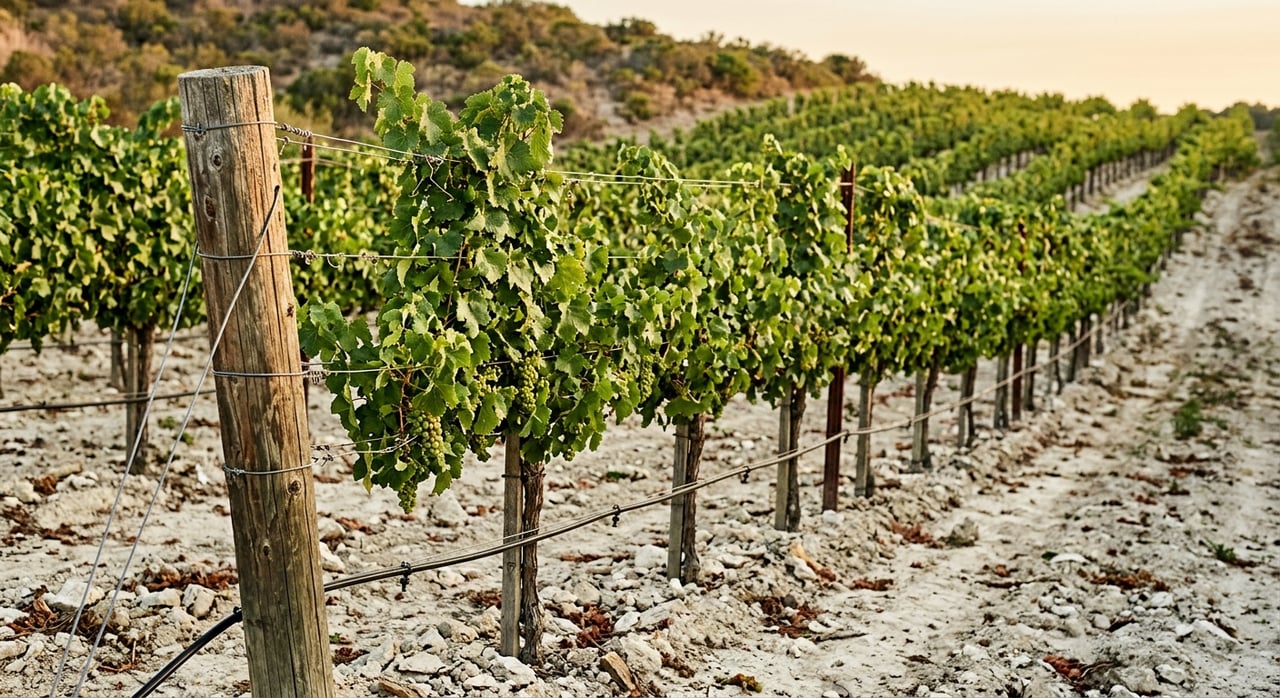
Buying vineyard land in Gillespie County can feel like buying a dream. You picture rolling Hill Country views, rows of vines, and a place with real long-term potential. But before you fall for the scenery, you need to know whether the land can actually support a vineyard, because the right parcel is built on water, soils, slope, and due diligence. Let’s dive in.
Start With Site Suitability
In Gillespie County, the first question is not how pretty the property looks. The real question is whether the tract can support grape production in a practical, sustainable way.
Texas A&M AgriLife identifies irrigation water quality and capacity, along with soil conditions, as the key vineyard site factors. Those issues can be difficult and expensive to fix after you buy, which is why smart buyers evaluate the site before making plans for planting, building, or branding.
AgriLife recommends a site analysis that includes soil evaluation, water testing, and drainage testing. A standard soil test can help you understand chemistry, but it does not fully show soil depth or internal drainage, so you need a more complete view of the property.
Why Gillespie County Draws Vineyard Buyers
Gillespie County sits in one of the best-known wine areas in Texas. It includes the Bell Mountain and Fredericksburg in the Texas Hill Country AVAs, and it also lies within the larger Texas Hill Country AVA.
That matters because the region has a strong wine-country identity. Texas Hill Country Wineries describes the area as part of a major winery and vineyard destination, with the Fredericksburg corridor and Wine Road 290 drawing attention to the local wine scene.
For you as a buyer, that creates a compelling backdrop. Still, the wine-country story only adds value if the land itself can grow grapes successfully.
Terrain Matters More Than Views
A dramatic Hill Country view can be appealing, but a beautiful setting does not always make a strong vineyard site. In this part of Texas, terrain can help or hurt depending on how the land handles temperature and air movement.
AgriLife notes that higher-elevation sites often benefit from cooler nighttime temperatures and better air drainage. It also warns that river and creek bottoms can become frost pockets, and on cold mornings there can be as much as a 10 degree difference between the top of a hill and the bottom.
That is a major reason buyers often favor hilltops and well-drained slopes over low-lying areas. If cold air settles into a hollow or drainage basin, the land may be much riskier than it first appears.
Elevation in the Local AVAs
AgriLife describes Bell Mountain AVA as covering slopes of Bell Mountain in Gillespie County at roughly 1,500 to 1,800 feet. It also describes the Fredericksburg AVA as surrounding Fredericksburg with elevations up to about 1,900 feet.
Those elevation ranges help explain why experienced land buyers study slope, aspect, and air drainage so closely. In a vineyard setting, topography is not just part of the view. It is part of the business plan.
Soil Conditions Vary Across the County
One of the biggest mistakes a buyer can make is assuming one Hill Country tract is basically like the next. In Gillespie County, soil conditions can change significantly from parcel to parcel and even across the same property.
USDA soil series data tied to Gillespie County shows just how variable local soils can be. Some local soil types are shallow over limestone, some are rocky, and some have drainage or texture characteristics that can affect productivity and planting decisions.
That means you should not rely on broad assumptions about the area. You need parcel-level information before deciding whether a tract fits your vineyard goals.
Four Soil Questions To Ask
When you evaluate a tract, keep these four practical questions in mind:
- How deep is the soil before bedrock?
- How quickly does the soil drain?
- How rocky is the surface and subsurface?
- Does the soil vary across the property?
The NRCS Web Soil Survey is the official source for current soil survey maps and reports, so it is a strong starting point for early screening. Still, AgriLife makes clear that map data and paper tests should be paired with on-site evaluation, especially where shallow soils or poor drainage may change the economics of the project.
Water Can Be the Limiting Factor
In many vineyard purchases, water is the issue that decides whether the deal works. Even if the soils and topography look promising, the property still needs enough usable water to support irrigation.
AgriLife says grapes generally need 24 to 36 inches of water during the growing season and that irrigation is required statewide for production quality. For commercial vineyards, AgriLife advises planning for at least 5 gallons per minute per acre, with 10 gallons per minute preferred.
Water quality matters just as much as supply. Grapes are sensitive to sodium, chloride, and boron, which is why buyers should verify both quantity and quality before closing.
Local Well Rules in Gillespie County
Gillespie County buyers also need to understand local groundwater oversight. According to the Hill Country Underground Water Conservation District, all wells in Gillespie County must be registered with the District.
Wells used for commercial, irrigation, or municipal purposes are permitted and subject to spacing and production rules. If your property plan includes irrigation for vines, this is not something to review later. It should be part of your early due diligence.
County Rules May Affect Your Timeline
If your purchase includes more than raw vineyard ground, local development rules can become just as important as the agricultural features. This often applies when you are considering a residence, winery building, tasting room, event use, or future subdivision.
Gillespie County’s Engineering Department reviews subdivision, floodplain, and right-of-way permits. The county also states that the adopted minimum lot size for subdivisions served by well and OSSF is 6 acres per lot, with density tied to the parent tract.
The county has also framed local planning around conserving water and addressing drought and heat. That makes it wise to ask early how your intended use fits local requirements rather than assuming approvals will be simple.
Check Septic and Floodplain Early
If the property plan includes any structure served by septic, timing matters. Gillespie County’s OSSF office states that floodplain determinations now go through the County Engineer before septic applications are completed.
That may not stop a project, but it can affect your schedule. If you wait until after closing to investigate these items, you may discover delays that could have been anticipated during contract negotiations.
Know Whether You Want a Vineyard or a Wine Business Site
Not every vineyard land purchase has the same goal. Some buyers want agricultural production only, while others are looking for a broader wine-business opportunity that could include a winery, tasting room, or visitor experience.
That distinction matters because the property criteria may shift depending on your plan. For a vineyard-only purchase, soils, slope, drainage, and water should lead the process.
For a winery or hospitality-focused property, visibility, road access, and proximity to wine-trail activity may carry more weight. In Gillespie County, Texas Hill Country Wineries describes Wine Road 290 as a 45-mile corridor between Johnson City and Fredericksburg with wineries, vineyards, dining, and lodging, which helps explain why location strategy can differ from pure agricultural suitability.
AVA Recognition Supports the Story
AVA location can also matter for branding. The Bell Mountain and Fredericksburg in the Texas Hill Country AVAs are established grape-growing areas within Gillespie County, and the county also sits within the broader Texas Hill Country AVA.
That said, AVA recognition does not make a weak site stronger. It can support the property’s wine-country story, but it does not replace the need for solid soils, workable terrain, and dependable irrigation water.
A Smart Due Diligence Checklist
Before you buy vineyard land in Gillespie County, make sure you can answer the basics with confidence. A thorough review now can protect you from expensive surprises later.
Use this checklist as a starting point:
- Review slope, elevation, and air-drainage patterns across the tract
- Identify whether any portion of the land may act like a frost pocket
- Pull NRCS soil maps and compare soil types across the parcel
- Confirm soil depth before limestone bedrock and note rocky areas
- Test water quantity and quality for irrigation needs
- Verify well registration or permit requirements with the local groundwater district
- Ask whether subdivision, floodplain, right-of-way, or septic approvals could affect your plan
- Decide early whether you are buying for grape production, a winery concept, or both
The Bottom Line for Buyers
Gillespie County offers real vineyard appeal, and its place in Texas wine country gives buyers a strong market story. But the best vineyard purchases are evaluated as agricultural sites first and lifestyle properties second.
If you focus on site suitability, water, soils, terrain, and local permitting early, you will make better decisions and avoid chasing a property that looks right but performs poorly. In a market like this, informed land buying is what protects both your vision and your investment.
When you are ready to evaluate vineyard land in Gillespie County or anywhere in the Hill Country, Topper Real Estate can help you approach the search with local knowledge, careful due diligence, and the white-glove guidance complex land purchases deserve.
FAQs
What should you check first before buying vineyard land in Gillespie County?
- Start with site suitability, especially irrigation water quality and capacity, soil conditions, and drainage, because those factors are often difficult or expensive to fix after purchase.
Why does slope matter for vineyard land in Gillespie County?
- Slope can improve air drainage and reduce frost risk, while low-lying areas, creek bottoms, and hollows may act as frost pockets.
How important is water for a Gillespie County vineyard property?
- Water is critical because AgriLife says grapes generally need 24 to 36 inches of water during the growing season, and irrigation is required statewide for production quality.
Are all wells regulated in Gillespie County, Texas?
- Yes, the Hill Country Underground Water Conservation District states that all wells in Gillespie County must be registered, and commercial or irrigation wells are permitted and subject to local rules.
Do vineyard buyers need to check county development rules in Gillespie County?
- Yes, especially if the plan includes a residence, winery building, tasting room, subdivision, septic system, or any project that may trigger floodplain or right-of-way review.
Does being in an AVA guarantee good vineyard land in Gillespie County?
- No, AVA location can support the wine-country story, but vineyard success still depends on parcel-specific factors like soil, water, drainage, and topography.