Curious why some luxury homes in Gillespie County feel instantly at home in the landscape while others do not? In this part of the Texas Hill Country, standout design is rarely about excess. It is about using the right forms, materials, and proportions to reflect the land, local history, and the way people live here. If you are buying, selling, or simply studying the market in 78675, this guide will help you recognize the signature architecture styles that shape Gillespie County luxury homes. Let’s dive in.
Why Gillespie County Homes Look Distinct
Gillespie County sits on the Edwards Plateau, where limestone hills, shallow soils, oak-juniper vegetation, and long rangeland views shape the built environment. That setting has encouraged durable, site-responsive construction for generations. In simple terms, homes here tend to look best when they feel grounded in the land.
Fredericksburg also adds a strong cultural layer to the county’s visual identity. German settlers shaped the town’s earliest building patterns, moving from log homes to Fachwerk houses with stone or plaster infill. That early building tradition still influences what many buyers and sellers see as locally authentic today.
German-Texan Roots in Luxury Design
Fachwerk as a Lasting Influence
Fachwerk is one of the clearest historical references in Gillespie County architecture. Traditional examples used upright timbers with stone or brick infill, often finished with plaster or whitewash. The look is simple, sturdy, and rhythmic rather than ornate.
In luxury homes, you may not always see a direct historic reproduction. Instead, you will often notice the influence in the home’s massing, visible structure, masonry chimneys, and walls that feel hand-built rather than overly polished. That connection to craft helps a high-end home feel rooted in place.
Pioneer Farmhouse Details
Historic German pioneer homes in Fredericksburg included features like dogtrot or durchgang layouts, gable-end chimneys, porch parapets, and decorative balustrades. These details matter because they show how practical design became part of the area’s long-term identity. Even when modern homes reinterpret these forms, the visual cues still read as local.
For you as a buyer or seller, this means architectural value in Gillespie County often comes from restraint and proportion. A home does not need elaborate ornament to make an impression. Often, a strong roofline, honest materials, and balanced facade do more.
Sunday Houses Still Shape the Local Aesthetic
Small Forms With Big Identity
Sunday houses are a uniquely important part of Fredericksburg’s story. These were usually small second dwellings used by rural German families when they came to town for worship, shopping, or business. They were often one-and-a-half stories tall, with gabled roofs, front porches, outside stairs, and cypress shingles.
Today, Sunday houses still matter because they show how modest, practical forms can become culturally prized. Their scale and simplicity continue to influence what feels authentic in the local market. In many luxury properties, that influence shows up in guest houses, detached suites, compact massing, or porch-forward design.
Hill Country Modern Leads New Luxury Homes
Clean Lines With Local Materials
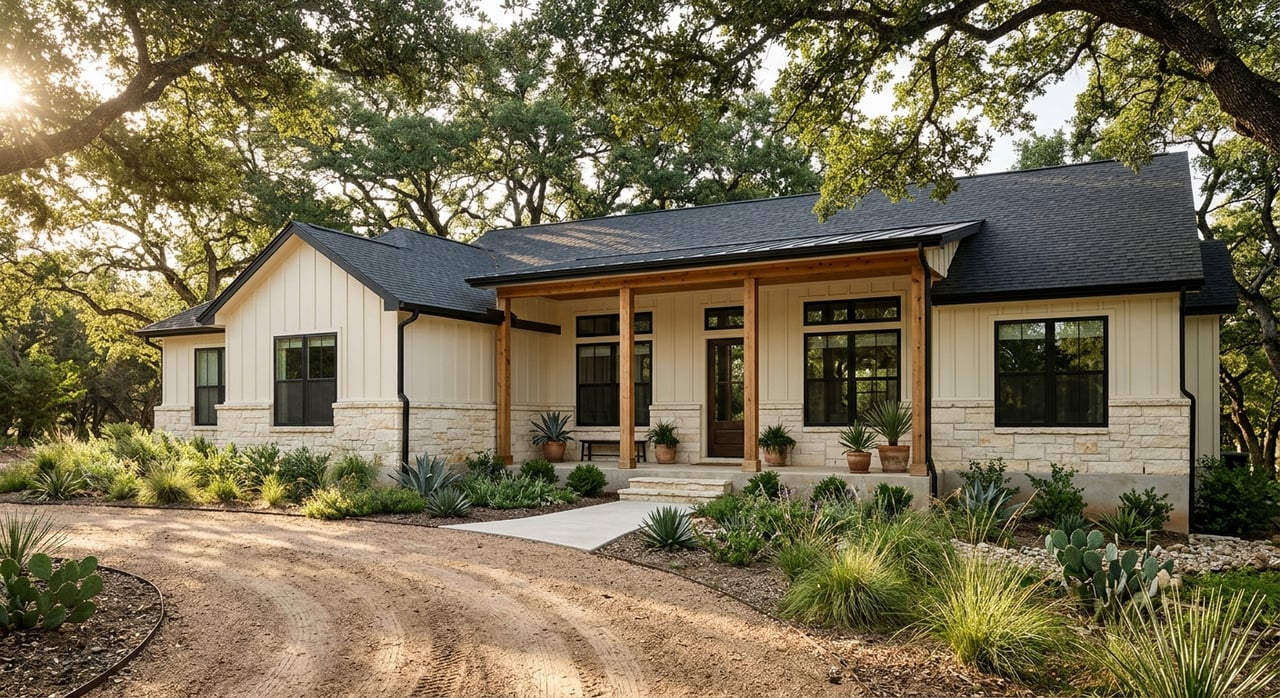
Among newer high-end homes, Hill Country Modern is one of the most recognizable styles in the Fredericksburg area. Fredericksburg’s Historic District Design Guidelines identify it as a currently popular compatible style. The style blends modern structural systems with locally grounded materials and passive climate features.
Its defining features include limestone masonry as the primary material, unpainted wood as a secondary material, large windows, wide roof spans, low-sloped gable or shed roofs, standing-seam metal roofs, and minimal ornament. The result is a home that feels clean and current without losing its Hill Country character.
Why Buyers Respond to It
Hill Country Modern works well in Gillespie County because it respects the visual language of the region. It keeps the limestone-and-shadow feel that belongs in this landscape while opening up interiors with glass and broader spans. That balance often appeals to buyers who want luxury design without a style that feels imported from somewhere else.
If you are evaluating a property, look closely at how the materials and roof shape relate to the site. In this market, modern design usually feels strongest when it works with the terrain and long views rather than competing with them.
Farmhouse Modern Stays Popular
Familiar Form, Updated Finish
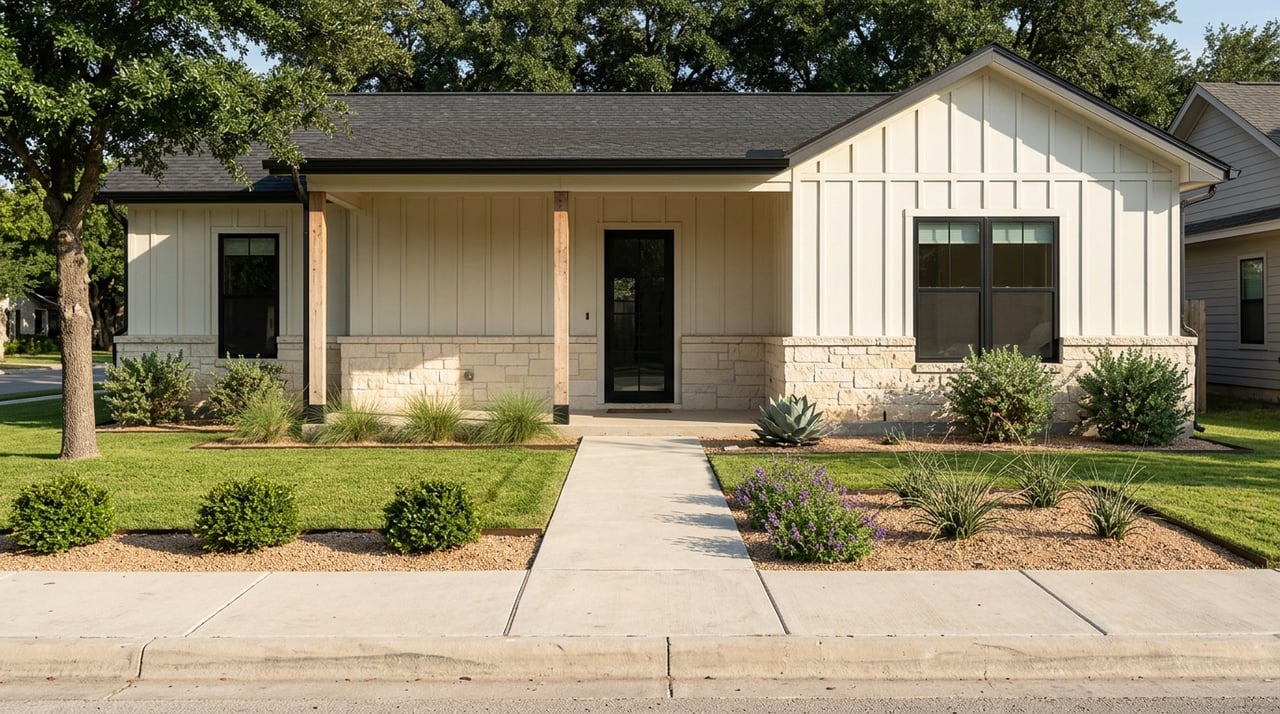
Farmhouse Modern is another style identified in Fredericksburg’s guidelines as compatible with the local character. This style usually features wood or fiber-cement siding, with stone, brick, or stucco as secondary materials. Large windows, cross-gabled roofs, and minimal ornament are also common.
In the luxury tier, Farmhouse Modern often brings a softer and more familiar profile than Hill Country Modern. It can feel approachable while still reading as polished and upscale. That makes it popular for buyers who want a refined Hill Country home with broad appeal.
Porch Presence Matters
The local guidelines recommend front porches on new primary residences and suggest that garages should not dominate the front facade. Those details may sound small, but they strongly affect curb appeal. A deep porch and balanced front elevation help a home feel more connected to Fredericksburg’s architectural context.
For sellers, this is worth noting because buyers often respond to homes that present well from the road without feeling overly suburban. In Gillespie County, that usually means porch depth, material texture, and roof silhouette matter more than flashy exterior features.
The Materials That Define Luxury Here
Limestone Comes First
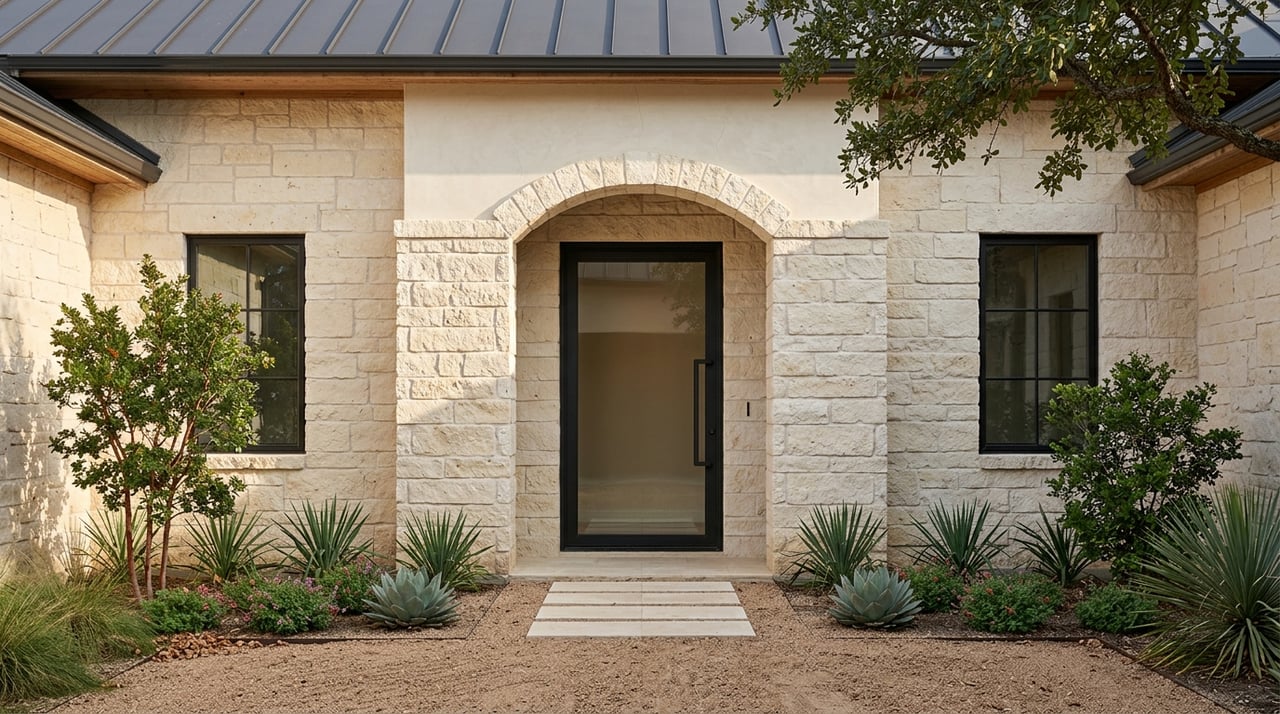
If there is one material that consistently signals Gillespie County luxury, it is native limestone. It appears across historic references, current design guidance, and high-end Hill Country projects. Limestone gives a home visual weight, regional authenticity, and a strong connection to the surrounding hills.
It also works well with the rest of the local palette. Wood, steel, glass, stucco, and metal roofing often pair with limestone to create homes that feel substantial but not heavy. The combination is both practical and visually tied to the land.
Wood, Metal, and Glass Add Contrast
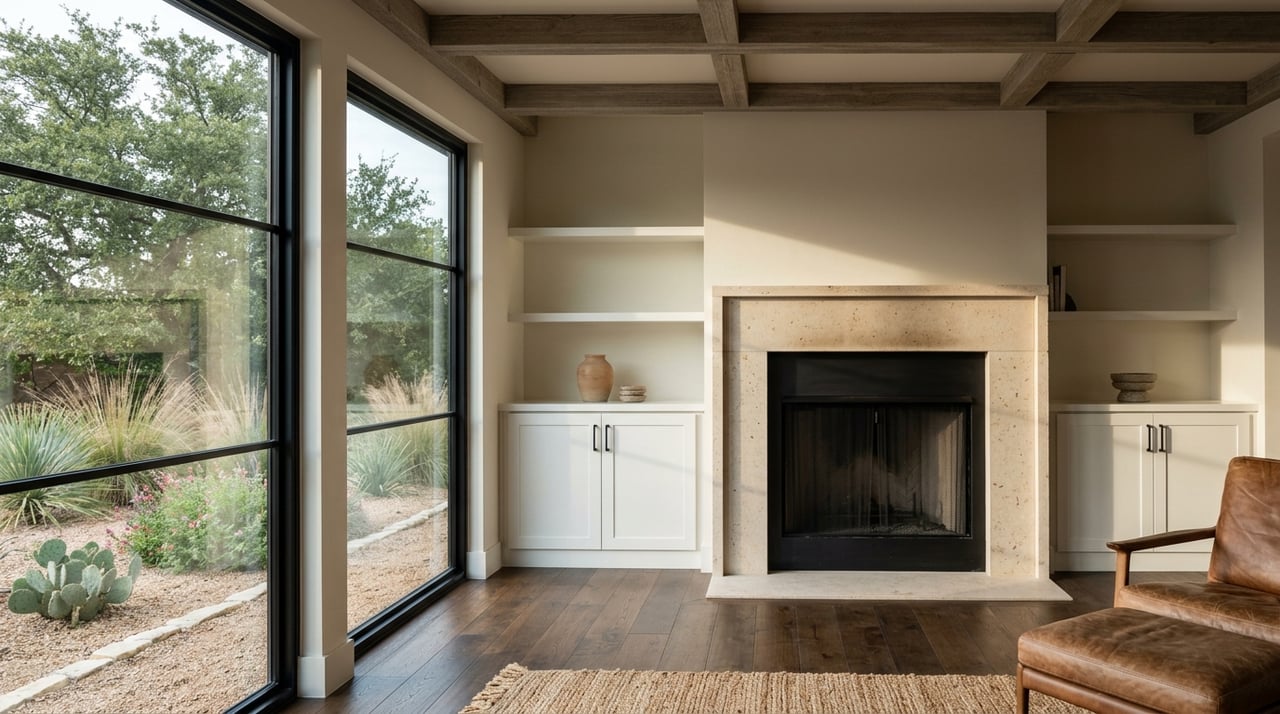
Many luxury homes in the Hill Country use stained or unpainted wood, steel accents, and broad glazing to add warmth and openness. These materials are especially common in homes designed to capture views, breezes, and natural light. Wide overhangs and shaded outdoor areas also fit naturally with the climate and setting.
When these elements are done well, they elevate a home beyond rustic styling. The look becomes more intentional, with cleaner detailing and stronger indoor-outdoor flow. That is often where luxury shows up in this market.
What Makes a Home Feel Authentic
Key Visual Signals
In Gillespie County, authenticity usually comes from a few consistent design choices. Native limestone, restrained rooflines, honest structural expression, and porch or wall proportions that echo historic Hill Country forms all help a home feel right for the area. These are the details that make a property look like it belongs here.
That does not mean every home needs to look historic. In fact, contemporary styles can work very well. The local benchmark is compatibility in massing, materials, roof form, fenestration, and color.
Luxury Without Losing Place
A modern luxury home can absolutely feel right in Gillespie County. Larger spans, higher-quality glazing, cleaner detailing, and more expansive indoor-outdoor transitions often define the luxury layer. The key is that these upgrades usually build on the same local stone-and-metal vocabulary rather than replacing it.
For buyers, this means the strongest homes often feel both elevated and regionally specific. For sellers, it means architecture that reflects the county’s character can support stronger presentation and broader appeal.
Reading the Setting Around the Home
Gillespie County luxury homes are often best understood as part of a wider wine-country and ranch landscape rather than a purely suburban one. The county sits within the Texas Hill Country AVA, and many homes are designed to respond to open land, mature oaks, stone outcroppings, and long-range views. That setting influences everything from roof shape to window placement.
When you tour or market a luxury property here, pay attention to five visual cues:
- Limestone color and texture
- Roof silhouette
- Porch depth
- Window rhythm
- How the home sits among oaks, stone, and views
Those details often reveal more about the home’s architectural quality than trend-based finishes alone.
What This Means for Buyers and Sellers
If you are buying in Gillespie County, understanding these architecture styles can help you separate homes that are simply expensive from homes that are truly place-specific. Design that reflects local materials and forms often holds deeper appeal because it connects with what makes the Hill Country distinctive. It can also make your decision-making clearer when comparing very different luxury properties.
If you are selling, the architectural story of your home matters. Buyers in this market often notice whether a property feels grounded, compatible, and thoughtfully designed for the region. Presenting those strengths clearly can help your home stand out in a competitive luxury landscape.
Whether you are evaluating a stone-and-glass modern build, a farmhouse-inspired estate, or a home with subtle German-Texan references, local context matters. That is where informed guidance makes a real difference. When you are ready for expert help buying or selling in the Hill Country, connect with Topper Real Estate.
FAQs
What architecture style is most common in Gillespie County luxury homes?
- Hill Country Modern and Farmhouse Modern are two of the most recognizable styles in newer luxury homes, often shaped by local limestone, simple rooflines, and minimal ornament.
What makes a luxury home in Fredericksburg feel authentic?
- Homes often feel locally authentic when they use native limestone, restrained roof forms, porch-forward design, and proportions that reflect historic Hill Country and German-Texan building traditions.
What is Fachwerk in Gillespie County architecture?
- Fachwerk is a historic German vernacular building method that uses upright timbers with stone or brick infill, and it remains an important visual reference in the Fredericksburg area.
Can modern homes fit the Gillespie County setting?
- Yes. Contemporary homes can fit well when their massing, materials, roof form, fenestration, and color remain compatible with the local architectural vocabulary.
Why are porches important in Gillespie County home design?
- Porches help connect homes to the Hill Country climate and historic building patterns, and they remain an important part of curb appeal and local architectural character.
What materials define Hill Country luxury homes near 78675?
- Native limestone is the standout material, often paired with wood, steel, glass, stucco, and metal roofing to create a grounded, regionally appropriate look.